
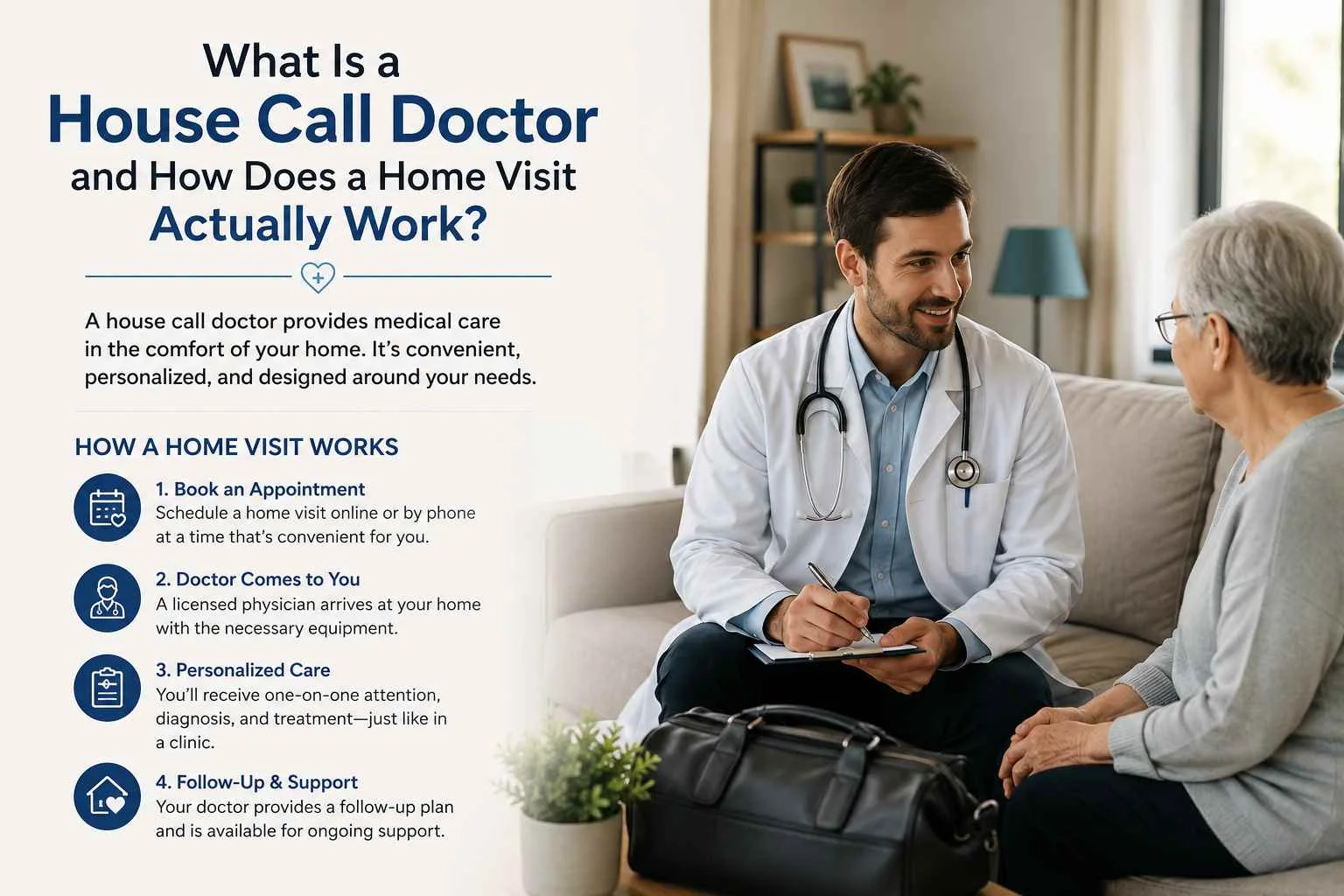
A house call doctor is a licensed physician who travels to a patient’s home to diagnose and treat illness instead of consulting at a clinic. A home visit follows five stages: booking, phone triage, physical examination, on-the-spot treatment or prescription, and a documented follow-up plan.
Home visits once dominated medicine — until the 1940s, about 40% of doctor consultations in the United States happened at home. The model is returning fast, driven by ageing populations, portable diagnostic technology, and demand for convenient care. In the UAE, home healthcare providers such as Call Doctor Now operate under licenses issued by the Dubai Health Authority, which regulates all home medical services in the emirate.
This guide explains what house call doctors treat, the equipment they carry, who benefits most, what a visit costs, and how to verify a home doctor’s license.
What Is a House Call Doctor?
A house call doctor is a fully qualified, registered physician who delivers primary and urgent medical care at a patient’s residence, hotel, or workplace instead of a fixed clinic.
House call doctors hold the same medical license as hospital and clinic physicians. In Dubai, every home visit doctor requires an active Dubai Health Authority license to practice. The role is also called a doctor on call, home doctor, or domiciliary physician. A typical home consultation covers medical history, physical examination, diagnosis, treatment, and a written medical report.
How a House Call Doctor Differs From a Clinic GP
The qualifications are identical; the delivery model differs. A clinic GP sees patients in fixed appointment slots, while a house call doctor travels with portable equipment and treats one patient per location. Home consultations typically last 30–45 minutes, longer than the standard 10–15 minute clinic appointment, because travel time is already priced into the visit.
House Call Doctor vs Telemedicine: In-Person vs Virtual Care
Telemedicine connects a patient to a doctor by video; a house call brings the doctor physically to the patient. Video consultations suit prescription renewals and minor queries but cannot include physical examinations, vital-sign checks, or procedures such as IV drips andblood tests. Many providers combine both: phone triage first, then an in-person visit when hands-on assessment is required.
The History and Modern Resurgence of Home Visits
Home visits were the default model of medicine for centuries before clinics replaced them, and the model is now growing again worldwide.
Why House Calls Declined in the 20th Century
After World War II, hospital expansion, medical specialization, and fixed diagnostic equipment made clinic-based care more efficient for doctors. Insurance systems also reimbursed clinic visits at higher rates, which pushed physicians out of patients’ homes.
What Is Driving the Return of Home-Based Care
Three forces are reviving house calls: aging populations, portable diagnostics, and post-pandemic demand for care without waiting rooms. According to the American Academy of Family Physicians, US physician home visits grew steadily after payment reforms, and home-based primary care programs cut hospital days by 60%. Grand View Research values the US house call market at USD 538 million in 2022, projected to reach USD 831 million by 2030.
How Does a Doctor Home Visit Actually Work? Step by Step
A doctor home visit works in five stages: booking, phone triage, dispatch, in-person examination and treatment, and then documentation and follow-up. The full process, from call to consultation, usually takes under two hours.
Step 1 — Requesting a Visit and Phone Triage
A home visit begins with a phone or WhatsApp request describing the symptoms, the patient’s age, and the location. A clinician then performs phone triage—a brief symptom assessment that confirms a home visit is safe and appropriate. Triage also identifies emergencies that require an ambulance instead of a house call.
Step 2 — Doctor Dispatch and Arrival Time Expectations
After triage, the provider dispatches the nearest available doctor to the patient’s home, office, or hotel. Urban arrival times typically range from 30 to 60 minutes; scheduled visits are booked by time slot. Reputable providers confirm the price and arrival window before dispatch.
Step 3 — Medical History and Physical Examination at Home
The visit starts with a structured medical history: current symptoms, existing conditions, medications, and allergies. The doctor then performs a physical examination using portable equipment — checking temperature, blood pressure, oxygen saturation, heart, lungs, throat, and abdomen. Patients should keep their medication list and previous reports ready.
Step 4—Diagnosis, Treatment, and Prescriptions On the Spot
The doctor diagnoses the condition and begins treatment during the same visit. On-the-spot treatment includes injections, IV fluid therapy, wound dressing, and rapid tests. Home doctors issue prescriptions under the same regulations as clinics, and many providers coordinate medication delivery to the patient’s address.
Step 5 — Medical Reports, Sick Certificates, and Follow-Up
Every visit ends with written documentation: a medical report, a prescription copy, and a sick leave certificate where medically justified. The doctor also sets a follow-up plan — a review call, a repeat visit, home nursing care, or referral to a hospital if the condition needs escalation.
What Conditions Can a House Call Doctor Treat?
A house call doctor treats most acute illnesses, chronic conditions, and minor procedures that do not require hospital equipment—including fever, flu, dehydration, infections, wounds, and routine disease monitoring.
Acute Illnesses Commonly Treated at Home
Acute conditions form the majority of home visit requests. House call doctors routinely treat fever, influenza, sore throat, respiratory infections, gastroenteritis, food poisoning, dehydration, urinary tract infections, migraines, and allergic reactions. Rapid test kits allow on-site confirmation of common infections before treatment begins.
Chronic Disease Management During Home Visits
Home visits suit long-term conditions that need regular monitoring without hospital facilities. Doctors manage diabetes, hypertension, cholesterol, thyroid disorders, and asthma through home check-ups that include blood pressure readings, glucose testing, ECG, and medication reviews. Scheduled visits benefit elderly patients most, because travel itself worsens many chronic conditions.
Procedures Performed at Home (IV Drips, Tests, Wound Care)
Portable equipment allows house call doctors to perform clinic-grade procedures at the bedside. Common procedures include IV fluid therapy for dehydration, blood sample collection for laboratory testing, injections and vaccinations, ECG recording, wound cleaning, suturing, and dressing changes. Lab samples collected at home are processed at licensed laboratories, with digital results usually delivered within 24 hours.
When a Home Visit Is NOT Appropriate: Emergency Red Flags
Some symptoms require an emergency department, not a home doctor. Call an ambulance immediately for chest pain, stroke signs (facial drooping, slurred speech, arm weakness), severe breathing difficulty, major bleeding, loss of consciousness, or serious trauma. Hospitals provide the imaging, surgery, and intensive care that no home visit can replace. In the UAE, dial 998 or 999 for ambulance services — see the UAE Government emergency guidelines for the full list.
What Equipment Does a Home-Visit Doctor Carry?
A home-visit doctor carries a full diagnostic kit—stethoscope, blood pressure monitor, pulse oximeter, thermometer, glucometer, portable ECG, and rapid test kits—replicating a clinic examination room in a medical bag.
Standard Diagnostic Tools in the Doctor’s Bag
The core doctor’s bag contains the same instruments used in a clinic consultation. Standard tools include a stethoscope for heart and lung assessment, a sphygmomanometer for blood pressure, a pulse oximeter for oxygen saturation, a digital thermometer, a glucometer for blood sugar, and an otoscope for ear and throat examination. The bag also carries injections, IV supplies, sterile dressing materials, and emergency medications.
Portable Technology: ECG, Rapid Tests, and Mobile Lab Support
Miniaturized technology now brings hospital-grade diagnostics into the home. Handheld ECG devices record heart rhythm at the bedside, and rapid test kits confirm influenza, strep throat, COVID-19, and urinary infections within minutes. For deeper diagnostics, doctors collect blood samples at home for processing at licensed laboratories, while ancillary providers supply mobile X-ray and ultrasound when imaging is required. Electronic health records let the doctor review patient history and document findings on-site.
Who Benefits Most From At-Home Doctor Visits?
At-home doctor visits benefit elderly patients, young children, post-surgical patients, immunocompromised individuals, and anyone for whom traveling to a clinic is difficult, risky, or unnecessarily stressful.
Elderly Patients and People With Limited Mobility
Elderly patients gain the most from home-based care. Clinic travel is physically demanding for people with arthritis, dementia, Parkinson’s, or post-stroke weakness, and waiting rooms expose frail patients to infection. Home visits also let the doctor observe fall hazards, medication storage, and living conditions—insights no clinic appointment can capture. Research from the US Department of Veterans Affairs, published by the American Academy of Family Physicians, found home-based primary care reduced hospital days by 60% and nursing home admissions by 89%.
Children, Infants, and Worried Parents
Sick children recover better in familiar surroundings. Home visits remove the stress of transporting a feverish infant, eliminate waiting-room exposure to other infections, and let the doctor assess the child in a calm environment. Pediatric home visits commonly cover fever assessment, newborn checks, and childhood vaccinations.
Post-Surgical and Immunocompromised Patients
Patients recovering from surgery should avoid unnecessary travel and crowded medical facilities. Home visits provide wound checks, dressing changes, suture removal, and recovery monitoring without a hospital return trip. For immunocompromised patients—those undergoing chemotherapy or taking immunosuppressing medication—home care removes the single biggest avoidable risk: exposure to infection in clinical waiting areas.
Benefits and Limitations of Home Medical Visits
Home medical visits deliver longer consultations, lower infection exposure, and proven reductions in hospital admissions — but they cannot replace hospitals for imaging, surgery, or emergency care.
Evidence-Based Benefits: What the Research Shows
The strongest evidence for home visits comes from large-scale payer data. The US Medicare Independence at Home demonstration saved an average of USD 3,000 per patient in its first year while reducing hospital readmissions and emergency room visits. Beyond cost, home visits give doctors 30–45 minutes per patient instead of the 10–15 minute clinic standard, which improves diagnostic accuracy and medication review. Patients also avoid travel strain and waiting-room infection exposure, and treatment such as IV fluids begins immediately in the same visit as diagnosis.
Honest Limitations Compared With Hospitals and Clinics
Home visits have clear boundaries. A house call doctor cannot perform X-rays, CT scans, surgery, or continuous monitoring, so fractures, internal injuries, and unstable patients need hospital facilities. Response times depend on doctor availability and traffic, unlike a hospital that treats on arrival. Per-visit costs also run higher than clinic consultations, because one doctor serves one patient per location. A responsible provider states these limits during phone triage and escalates to a hospital when the condition demands it.
How Much Does a House Call Doctor Cost? (Pricing Factors Explained)
A house call doctor’s price depends on five factors: time of day, location distance, clinician type, procedures performed, and insurance coverage—home visits cost more per consultation than clinics but often prevent larger hospital bills.
What Influences the Price of a Home Visit
Five variables set the final price of a home visit. Night, weekend, and public holiday requests often carry surcharges with some providers. Longer travel distances increase dispatch costs. A specialist consultation costs more than a general practitioner visit. Procedures — IV drips, blood tests, ECG, wound suturing — are billed on top of the base consultation. In Dubai, standard home GP consultations typically range from AED 300 to AED 700, with procedures priced separately. Transparent providers confirm the full price during the booking call, before any doctor is dispatched.
Does Health Insurance Cover Doctor Home Visits?
Insurance coverage for home visits varies by policy, not by law. Some UAE health plans reimburse home consultations as outpatient care, while others classify them as out-of-network services. Patients should confirm three things before booking: whether the policy covers home visits, whether pre-authorization is required, and whether the provider offers direct billing or itemized invoices for reimbursement. Keeping the medical report and invoice from every visit supports faster reimbursement claims.
How to Verify a Home Visit Doctor Is Licensed and Qualified
Verify a home-visit doctor in three steps: confirm the provider’s facility license, check the doctor’s individual license with the health regulator, and ask for the license number before the visit begins.
Licensing and Regulation of Home Healthcare Providers
Home healthcare is a regulated medical activity, not an informal service. In Dubai, the Dubai Health Authority licenses both the home healthcare facility and every individual doctor and nurse it dispatches. DHA maintains a public license search that lets patients verify any clinician’s registration status online. Other emirates fall under the Ministry of Health and Prevention or the Department of Health Abu Dhabi. A legitimate provider shares license numbers on request; refusal to do so is a decisive warning sign.
Questions to Ask Before Booking Any Home Doctor
Five questions separate qualified providers from unregulated operators. Ask: Is a licensed doctor attending, or only a nurse? What is the doctor’s license number? What is the total price before dispatch? Will the visit include a written medical report? What happens if my condition needs hospital escalation? Reputable services answer all five during the booking call. Vague answers on licensing or pricing mean the patient should book elsewhere.
Frequently Asked Questions About House Call Doctors
1. What is a house call doctor called?
A house call doctor is also called a home visit doctor, doctor on call, home GP, or domiciliary physician. All terms describe a licensed physician who treats patients at their residence.
2. Do doctors still make house calls?
Yes. Home visits are growing worldwide, driven by aging populations and portable diagnostic technology. The US house calls market alone is projected to reach USD 831 million by 2030.
3. Is a house call doctor a fully qualified doctor?
Yes. House call doctors hold the same medical license as clinic and hospital physicians. In Dubai, every home doctor must carry an active DHA license.
4. Can a house call doctor write a prescription?
Yes. Home doctors prescribe medication under the same regulations as clinics. Controlled substances follow stricter rules and may require a hospital pharmacy.
5. Can a home doctor issue a sick leave certificate?
Yes, where medically justified. The doctor examines the patient, documents the diagnosis, and issues a certificate accepted by employers.
6. How long does a home doctor take to arrive?
Urgent urban visits typically take 30–60 minutes. Scheduled visits are booked by time slot, and reputable providers confirm the arrival window before dispatch.
7. What should I prepare before the doctor arrives?
Keep ready a list of current medications, previous medical reports, ID or insurance card, and a quiet space for the examination.
8. Can a home doctor do blood tests and IV drips?
Yes. Doctors collect blood samples at home for laboratory processing and administer IV fluid therapy for dehydration, with results usually delivered within 24 hours.
9. When should I go to a hospital instead of calling a home doctor?
Go directly to an emergency department for chest pain, stroke signs, severe breathing difficulty, major bleeding, or serious trauma. In the UAE, dial 998 for an ambulance.
10. Does insurance cover home doctor visits?
Coverage depends on the policy. Some plans reimburse home consultations as outpatient care; confirm coverage and pre-authorisation requirements with your insurer before booking.
