
Heatstroke is a life-threatening emergency, while heat exhaustion is an earlier heat-related illness that may worsen without prompt cooling. Heat exhaustion commonly causes heavy sweating, intense thirst, headache, dizziness, nausea, muscle weakness, and unusual fatigue. The person is usually still alert, but continuing to work, exercise, or remain in the heat can increase the risk of heatstroke.
Confusion, slurred speech, poor coordination, seizures, collapse, or loss of consciousness strongly suggest heatstroke. The skin may be hot and dry or still heavily sweating, so sweating does not rule it out. Review the CDC guidance on heat-related illnesses for recognized symptoms and first-aid measures.
Dubai residents, outdoor workers, tourists, parents, and carers should recognize these warning signs early. Move the affected person into shade or air conditioning and begin cooling immediately.
For persistent but non-emergency heat-exhaustion symptoms, contact Call Doctor Now for a medical assessment. Dr Muhammad Jan, a UAE-licensed general practitioner, advises that emergency warning signs such as confusion, seizures, or unconsciousness should always be referred directly to ambulance services rather than managed through a routine home consultation.
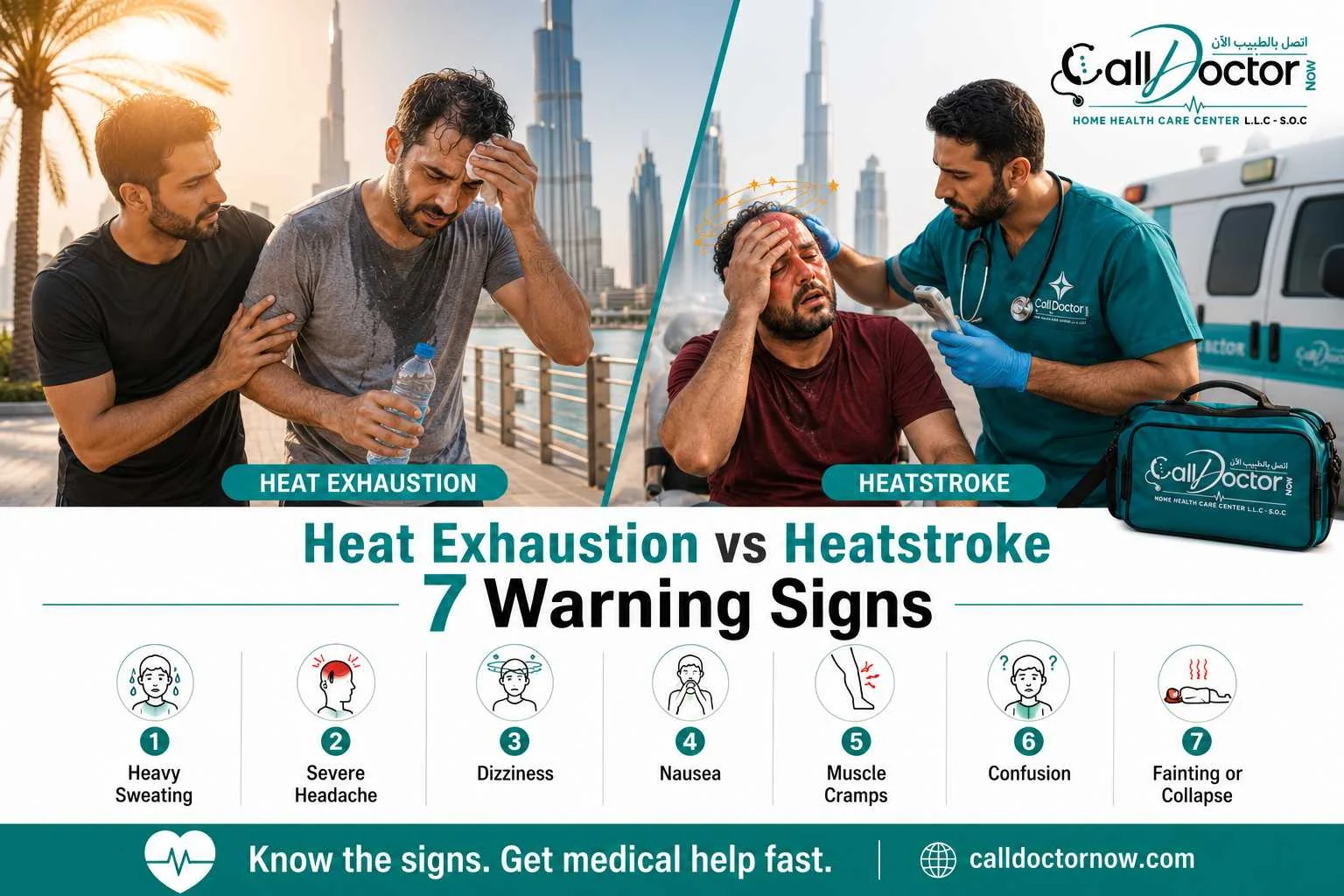
Heat Exhaustion and Heatstroke Are Not the Same
Heat exhaustion and heatstroke belong to the same spectrum of heat-related illness, but they differ in severity. Heat exhaustion develops when the body loses excessive water and salt, usually through heavy sweating. Heatstroke occurs when the body can no longer control its temperature and brain function becomes affected.
The most important difference is the person’s mental state. Someone with heat exhaustion is generally alert, although they may feel dizzy, weak, or irritable. Confusion, unusual behavior, slurred speech, poor coordination, seizures, or unconsciousness indicate possible heatstroke and require emergency care.
What Is Heat Exhaustion?
Heat exhaustion is the body’s response to excessive fluid and salt loss during prolonged heat exposure or physical activity. It commonly causes heavy sweating, headache, dizziness, nausea, intense thirst, weakness, irritability, and reduced urination.
The person should stop all activity and move to shade or an air-conditioned area. Remove unnecessary clothing, cool the skin, and provide small sips of cool water only when the person is fully alert and able to swallow. Symptoms that worsen or fail to improve require medical assessment because untreated heat exhaustion can progress to heatstroke.
What Is Heatstroke?
Heatstroke is the most serious form of heat-related illness. It occurs when the body’s temperature-control system fails, allowing body temperature to rise dangerously and affecting the brain and other vital organs.
Warning signs include confusion, slurred speech, loss of coordination, seizures, collapse, or unconsciousness. The person may have hot, dry skin or may continue sweating heavily, so sweating does not rule out heatstroke. Begin rapid cooling and call the UAE ambulance service on 998 immediately.
Heat Exhaustion vs Heatstroke at a Glance
| Factor | Heat Exhaustion | Heatstroke |
| Cause | Excessive loss of water and salt through sweating | Failure of the body’s temperature-control system |
| Mental state | Usually alert, but may be dizzy, weak or irritable | Confusion, unusual behaviour, slurred speech, seizures or unconsciousness |
| Sweating | Usually heavy sweating | Skin may be dry or still heavily sweating |
| Body temperature | May be elevated | Often extremely high, commonly around 40°C or above |
| Typical symptoms | Headache, thirst, nausea, dizziness, weakness and reduced urination | Hot skin, confusion, poor coordination, collapse or seizures |
| Required response | Stop activity, move to a cool place, cool the body and offer small sips of water if fully alert | Call 998 and begin rapid cooling immediately |
| Emergency status | Requires prompt action and monitoring; seek medical help if symptoms persist or worsen | Life-threatening medical emergency |
Do not rely only on a thermometer. After heat exposure, a change in mental state is one of the clearest warning signs that heat exhaustion may have progressed to heatstroke.
7 Warning Signs of Heat Exhaustion and Heatstroke
Heat-related illness can worsen quickly, especially during outdoor work, exercise, or prolonged exposure to Dubai’s heat. Early symptoms usually reflect dehydration and heat exhaustion. Neurological symptoms, such as confusion, seizures, or unconsciousness, indicate possible heatstroke and require emergency action.
1. Heavy Sweating and Intense Thirst
Heavy sweating is the body’s attempt to release heat, but it also removes water and electrolytes, including sodium. If these losses are not replaced, blood volume can fall and the body becomes less effective at cooling itself.
Intense thirst combined with continued sweating is an early warning to stop physical activity, move to a cooler place, and begin rehydration. Do not wait for more severe symptoms to develop.
2. Headache, Dizziness, or Feeling Faint
Headache, light-headedness and dizziness can develop when heat stress and fluid loss affect circulation. A person may feel unsteady when standing, struggle to concentrate or feel close to fainting.
These symptoms indicate that the person’s tolerance for activity has fallen. Continuing to walk, exercise, or perform physical work increases the risk of collapse and further heat-related illness. The person should sit or lie down in a cool area and stop exertion immediately.
3. Nausea or Vomiting
Nausea is a recognized symptom of heat exhaustion and may appear with headache, dizziness, and weakness. Vomiting increases concern because it causes further fluid and electrolyte loss and can make safe oral rehydration difficult.
Continuing physical activity after nausea begins is unsafe. Stop the activity, begin cooling, and monitor the person closely. Repeated vomiting, worsening weakness, or an inability to drink requires prompt medical assessment.
4. Unusual Weakness, Irritability, or Extreme Fatigue
Ordinary tiredness usually develops gradually and improves with rest. Heat-related deterioration may appear suddenly or seem excessive compared with the level of activity being performed.
Warning signs include struggling to continue a familiar task, slowing down unexpectedly, becoming unusually irritable, or appearing physically exhausted. These changes should not be dismissed as poor fitness or lack of motivation, particularly when they occur with sweating, thirst, headache, or dizziness.
5. Reduced Urination or Dark Urine
Reduced urine output can indicate that the body is conserving water because of dehydration. Dark yellow urine may also suggest concentrated urine, particularly when accompanied by thirst, weakness, or dizziness.
Urine color alone cannot diagnose heat exhaustion or heatstroke. It can also be affected by food, medication, and medical conditions. Tea- or cola-colored urine after intense physical activity, especially with muscle pain or severe weakness, requires urgent medical evaluation because it may indicate heat-related muscle breakdown.
6. Confusion, Slurred Speech, or Poor Coordination
Confusion, unusual behavior, slurred speech, and difficulty walking are major danger signs. They suggest that heat is affecting the brain, not simply causing dehydration or ordinary fatigue.
A person may give inappropriate answers, appear disoriented, stumble, become agitated, or fail to follow simple instructions. Do not assume that the person is merely exhausted.
Treat Altered Mental Status as Suspected Heatstroke
Minor irritability can occur with heat exhaustion, but marked or persistent neurological changes should be treated as suspected heatstroke. Move the person to a cool area, begin rapid cooling, and activate emergency medical services. Do not delay action while waiting for a temperature reading.
7. Collapse, Seizure, Unconsciousness, or Very High Body Temperature
Collapse, seizures, or loss of consciousness indicate severe heat-related illness. A person with heatstroke may feel extremely hot and may have dry skin or continue sweating heavily. Sweating does not rule out heatstroke.
Very high body temperature strengthens the suspicion, but a thermometer is not required before taking emergency action. Heatstroke can damage the brain, heart, kidneys, and liver, and the risk increases the longer the body remains dangerously overheated.
What to Do Immediately
Quick action can prevent heat exhaustion symptoms from worsening and reduce the risk of serious complications.
For Suspected Heat Exhaustion
- Stop all physical activity.
- Move the person into shade or air conditioning.
- Remove unnecessary or heavy clothing.
- Cool the skin with cool water or cold compresses.
- Offer small, frequent sips of cool water if the person is fully alert and able to swallow.
- Seek medical evaluation if symptoms are severe, worsen, or do not improve after cooling.
These measures follow the first-aid guidance provided by the CDC’s National Institute for Occupational Safety and Health.
For Suspected Heatstroke
- Begin rapid cooling while waiting for medical help.
- Move the person into shade or air conditioning.
- Remove excess clothing and wet the skin with cool water.
- Apply cold, wet cloths or cold packs around the neck, armpits, and groin.
- Do not give fluids if the person is confused, unconscious, or unable to swallow safely.
- Stay with the person until emergency responders arrive.
The World Health Organization’s heatstroke guidance advises calling emergency services first and cooling the person aggressively while help is on the way.
How to Reduce Heat-Illness Risk
Heat-related illness is easier to prevent than treat. Reducing exposure, staying hydrated, and recognising the early symptoms of heat exhaustion can prevent a medical emergency.
Schedule Activity Outside Peak Heat
Plan outdoor work, exercise, and travel for the early morning or evening. Avoid strenuous activity during the hottest part of the day, particularly in direct sunlight or high humidity. The World Health Organization recommends limiting strenuous activity during peak heat periods.
Use Hydration, Shade, and Cooling Breaks
Drink water regularly rather than waiting until you feel thirsty. Take frequent breaks in shaded or air-conditioned areas, especially during physical work. Learn more about the warning signs of dehydration.
The CDC’s National Institute for Occupational Safety and Health recommends providing cool drinking water, limiting time in the heat, and increasing recovery time in cool areas.
Increase Heat Exposure Gradually
People who are new to Dubai’s climate or returning after time away should increase their heat exposure gradually. New and returning outdoor workers may require approximately 7 to 14 days to become acclimatized to hot working conditions.
Use a Buddy System for Outdoor Work
Outdoor workers should monitor each other for heavy sweating, weakness, dizziness, confusion, or unusual behavior. A coworker may notice heatstroke warning signs before the affected person recognizes the danger.
NIOSH recommends a buddy system so workers can observe each other for signs of heat-related illness.
Follow UAE Occupational Heat-Safety Requirements
The UAE’s Occupational Heat Stress Prevention Policy restricts work under direct sunlight and in open areas between 12:30 PM and 3:00 PM, from 15 June to 15 September each year.
Employers and workers should review the current requirements on the UAE Ministry of Human Resources and Emiratisation website, including rules relating to shaded rest areas, drinking water, and workplace heat protection.
FAQs
1. What is the main difference between heat exhaustion and heatstroke?
Heat exhaustion usually causes heavy sweating, dizziness, nausea, and weakness. Heatstroke affects brain function and may cause confusion, seizures, or unconsciousness.
2. Can heat exhaustion turn into heatstroke?
Yes. Without cooling, rest, and hydration, heat exhaustion can worsen and develop into heatstroke.
3. Can someone with heatstroke still be sweating?
Yes. A person with heatstroke may have dry skin or continue sweating heavily.
4. When should I call an ambulance?
Call 998 immediately if the person is confused, collapses, has a seizure, loses consciousness or shows other signs of heatstroke.
5. What should I do first for suspected heat exhaustion?
Stop physical activity, move the person to a cool place, remove excess clothing and offer small sips of water if they are fully alert.
