
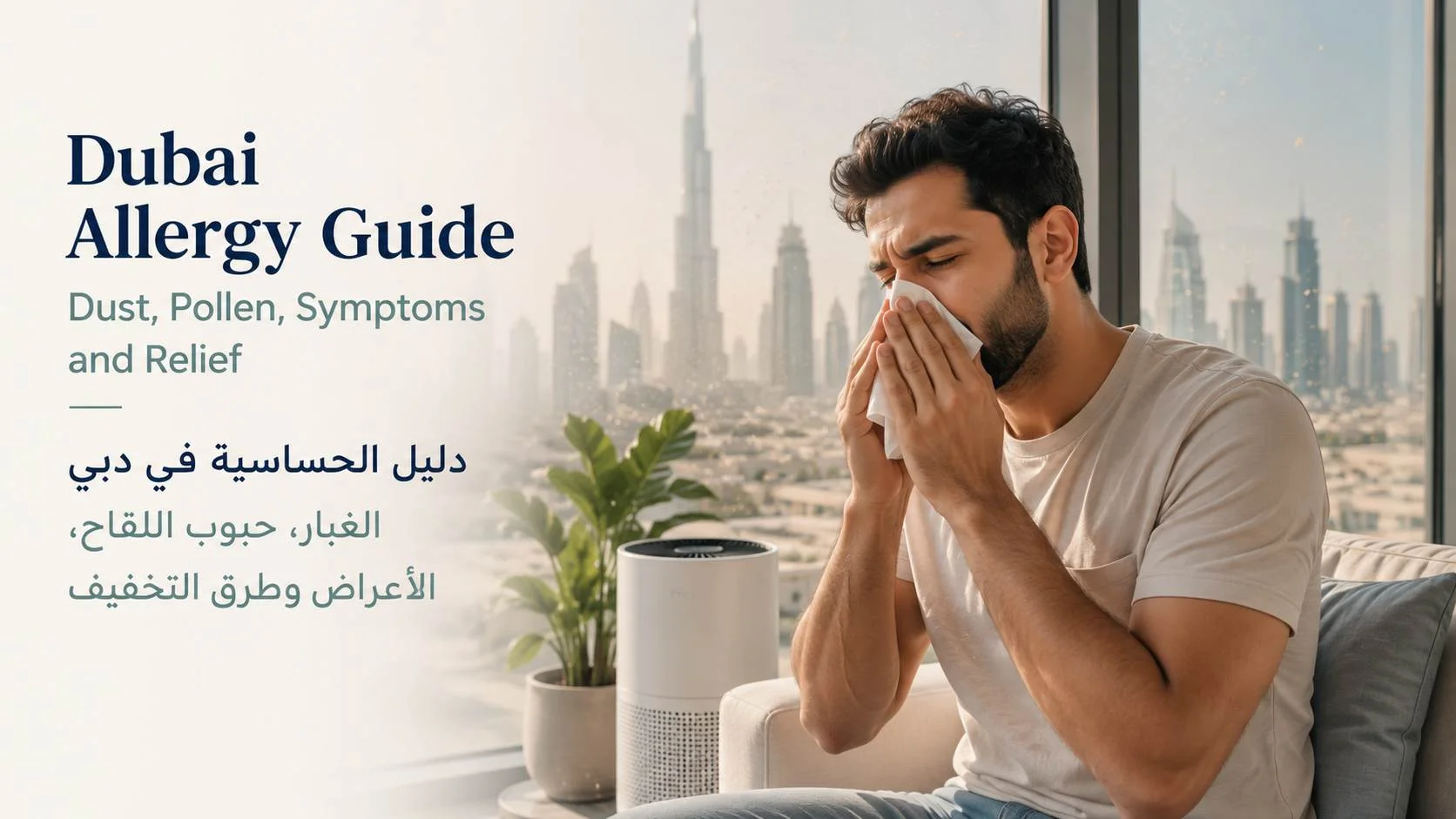
Environmental allergies occur when the immune system reacts to airborne substances such as pollen, dust mites, mold spores, pet dander, and cockroach particles. In Dubai, desert dust, fine particulate matter, indoor allergens, and seasonal pollen may worsen nasal, eye, or breathing symptoms. Dust exposure may trigger a true allergic response or non-allergic irritation. This Call Doctor Now guide, written by Dr Muhammad Jan, explains common triggers, symptoms, relief options, and medical warning signs.
What Is an Environmental Allergy?
An environmental allergy occurs when the immune system overreacts to a normally harmless airborne substance, such as pollen, house dust mites, mold spores, pet dander, or cockroach particles. Unlike non-allergic irritation from desert dust, smoke, or pollution, a true allergy involves a specific immune response.
How the Immune System Reacts to an Allergen
When a sensitized person inhales an allergen, the immune system identifies it as a threat. This reaction causes inflammation in the nose, eyes, or lower airways, producing symptoms such as sneezing, itching, nasal congestion, watery eyes, coughing, or wheezing.
IgE, Mast Cells and Histamine
The immune system produces immunoglobulin E, or IgE, against a specific allergen. IgE attaches to mast cells in respiratory tissues. During later exposure, the allergen activates these cells, causing the release of histamine and other inflammatory substances. Histamine contributes to itching, sneezing, mucus production, and tissue swelling.
Allergic Rhinitis, Allergic Conjunctivitis and Asthma
Environmental allergens may affect different parts of the respiratory system:
- Allergic rhinitis affects the nasal lining, causing sneezing, itching, congestion, and a runny nose.
- Allergic conjunctivitis affects the membrane covering the eyes, causing itching, redness, tearing, and swelling.
- Allergic asthma affects the lower airways, potentially causing coughing, wheezing, chest tightness, and shortness of breath.
These conditions may occur together. The Dubai Health Authority allergic rhinitis guidelines note that the eyes, sinuses, ears, and throat may also be involved.
Seasonal, Perennial and Occupational Allergies
| Allergy pattern | Typical triggers | Exposure pattern |
| Seasonal allergy | Tree, grass or weed pollen and outdoor mold | Worsens during periods of higher environmental exposure |
| Perennial allergy | Dust mites, pets, cockroaches and persistent indoor allergens | May occur throughout the year |
| Occupational allergy | Workplace dust, chemicals, flour, latex, mold, or animal proteins | Often worsens at work and improves during weekends or holidays |
People with persistent nasal, eye, or breathing symptoms may need clinical assessment to distinguish allergy from infection, asthma, or non-allergic rhinitis.
Why Allergy Symptoms Are Common in Dubai
Dubai residents may encounter several airborne allergens and irritants, including pollen, indoor dust mites, mold spores, pet dander, desert dust, traffic pollution, and tobacco smoke. Symptoms depend on individual sensitivity, exposure level, and whether the reaction is allergic or irritant-based.
Desert Dust and Airborne Particles
Desert dust contains mineral particles that may irritate the nose, throat, and airways. Exposure may cause sneezing, congestion, coughing, or breathing discomfort without involving an IgE-mediated allergy.
Sand and dust events also increase airborne particulate matter. The World Health Organization’s guidance on sand and dust storms explains that these events contribute to air pollution by raising particulate concentrations. Higher exposure may aggravate respiratory symptoms, particularly in people with asthma or existing airway sensitivity.
PM10 Versus PM2.5
PM10 includes inhalable particles measuring 10 micrometers or less. These particles may settle in the nose, throat, and larger airways.
PM2.5 includes finer particles measuring 2.5 micrometers or less. Their smaller size allows them to travel deeper into the lungs. Particle size alone does not determine whether a person will develop symptoms, as risk also depends on concentration, exposure duration, and underlying health.
Residents can review local PM readings through the UAE National Air Quality Platform, which reports PM10, PM2.5, and other air pollutants.
Pollen From Trees, Grasses and Weeds
Pollen is a fine reproductive substance released by trees, grasses, and weeds. Windborne pollen may enter the nose and eyes, where it can trigger sneezing, itching, congestion, and watery eyes in sensitized individuals.
Dubai’s parks, gardens, roadside planting, and landscaped residential areas contain different native and introduced plant species. Pollen exposure, therefore, varies according to plant type, weather, wind, rainfall, and location. A single fixed pollen calendar should not be applied to every Dubai resident without reliable local monitoring data.
Indoor Allergens in Air-Conditioned Buildings
Air conditioning does not directly create an allergy. However, closed buildings may allow allergen-containing dust to accumulate or recirculate when ventilation, filtration, and moisture control are inadequate.
House Dust Mites
House dust mites are microscopic organisms commonly associated with bedding, mattresses, carpets, and upholstered furniture. The allergy is caused by proteins in mite particles rather than ordinary dust itself. Symptoms may be more noticeable after sleeping, making the bed, or cleaning fabric-covered surfaces.
Mold Spores
Mold can develop where moisture persists around bathrooms, kitchens, condensation points, leaks, or poorly ventilated areas. Airborne mold spores may trigger nasal, eye, or asthma symptoms in sensitized people.
Pet Dander
Pet dander consists of small particles containing proteins from an animal’s skin, saliva, or urine. These allergens may remain suspended in the air or collect on furniture, clothing, and carpets. Symptoms may continue even when the animal is not in the same room.
Cockroach Allergens
Cockroach body particles, saliva, and waste may become part of indoor dust. Exposure can contribute to allergic rhinitis or asthma symptoms, particularly where food residue, moisture, and pest access are not controlled.
Pollution, Smoke and Temperature Changes
Traffic fumes, cigarette smoke, fragrances, cleaning products, and sudden temperature changes can also irritate the nose without causing a true allergy (see the irritant section below).
The Dubai Health Authority’s allergic rhinitis guidance recognizes pollution, cigarette smoke, and temperature changes as factors that may worsen rhinitis symptoms.
Persistent symptoms require proper evaluation because allergies, irritant rhinitis, respiratory infections, and asthma can overlap. Call Doctor Now’s guide to a doctor on call in Dubai explains when a non-emergency medical assessment may be appropriate.
Dust Allergy Versus Pollen Allergy
Dust mite and pollen allergies affect the same tissues and often produce similar symptoms. The main differences involve the allergen source, exposure setting, and symptom timing. “Dust allergy” usually refers to sensitivity to proteins from dust mites or other indoor allergens, not every visible dust particle.
| Factor | Dust mite or indoor allergy | Pollen allergy |
| Main source | Bedding, carpets, mattresses, soft furnishings and indoor dust reservoirs | Trees, grasses, weeds and outdoor vegetation |
| Exposure pattern | Often present throughout the year | Often variable or seasonal |
| Common location pattern | May worsen at home, during cleaning or after sleeping | May worsen outdoors or after time near vegetation |
| Main symptoms | Sneezing, nasal congestion, itching and watery eyes | Similar nasal and eye symptoms |
| Reliable confirmation | Exposure history and allergy testing | Exposure history and allergy testing |
Why Symptoms Alone Cannot Identify the Allergen
Dust mites and pollen can both cause sneezing, a blocked or runny nose, nasal itching, and watery eyes. Symptom timing may suggest a trigger, but it cannot confirm the responsible allergen.
Doctors assess where and when symptoms occur, including whether they worsen after sleeping, cleaning, outdoor activity, or workplace exposure. Skin-prick testing or serum-specific IgE testing may be considered when the trigger remains unclear. Call Doctor Now also explains what a house-call doctor can and cannot treat at home when symptoms require non-emergency medical assessment.
Irritant Dust Exposure Without Allergy
Desert dust, construction particles, smoke and pollution may irritate the nasal lining without activating an IgE-mediated allergic response. This condition may be described as non-allergic or irritant rhinitis.
Symptoms can include congestion, sneezing, nasal discharge, throat irritation, and coughing. Allergy tests may remain negative because the reaction results from airway irritation rather than sensitization to a specific allergen. Fine particles may also aggravate coughing or wheezing in people with asthma or sensitive airways.
Common Allergy Symptoms
Environmental allergies commonly affect the nose, throat, and eyes. Some people also develop lower-airway symptoms or sleep disruption. The Dubai Health Authority’s allergic rhinitis guidance identifies sneezing, itching, runny nose, postnasal drip, congestion, reduced smell, headache, eye symptoms, and fatigue as suggestive features.
Nose and Throat Symptoms
Common upper-airway symptoms include:
- Repeated sneezing
- A clear, runny nose
- Nasal congestion
- Itching inside the nose
- Postnasal drip
- Throat irritation
- Reduced sense of smell
Symptoms may begin soon after exposure to pollen, dust mites, mold, pets, or another relevant allergen. However, symptoms alone cannot confirm the trigger.
Eye Symptoms
Allergic conjunctivitis may occur with nasal allergies and cause the following:
- Itchy eyes
- Excessive tearing
- Redness
- Eyelid swelling
Itching is particularly suggestive of allergy, although eye infections and irritant exposure may cause similar redness or watering.
Lower-Airway Symptoms
Airborne allergens and irritants may also be associated with:
- Cough
- Wheezing
- Chest tightness
- Shortness of breath
These are not routine nasal symptoms. They require medical assessment for asthma or another respiratory condition, especially when symptoms are new, recurrent, or worsening. The Call Doctor Now guide explaining what a house-call doctor can and cannot assess at home provides further context on non-emergency evaluation and symptoms that require higher-level care.
Sleep, Fatigue and Concentration Problems
Persistent nasal congestion can disturb sleep by making nasal breathing difficult. Poor sleep may then contribute to daytime fatigue, drowsiness, headaches, and reduced concentration at work or school. Treating the underlying rhinitis and limiting relevant allergen exposure may help reduce this functional impact.
Is It an Allergy, a Cold, Sinusitis or Asthma?
Allergies, viral colds, sinusitis, and asthma can share symptoms such as congestion, coughing, and breathing discomfort. Itching, fever, discharge type, exposure pattern, and affected airway provide useful clues, but persistent or severe symptoms require clinical assessment.
| Feature | Environmental allergy | Viral cold | Bacterial sinusitis | Non-allergic rhinitis | Asthma |
| Itching | Common in the nose or eyes | Uncommon | Uncommon | Usually absent | Not typical |
| Fever | Not typical | Sometimes present | May occur | Not typical | Not typical |
| Body aches | Not typical | May occur | Uncommon | Absent | Absent |
| Nasal discharge | Usually clear and watery | Often starts clear and may thicken | May be thick or purulent | Usually clear | Not a primary symptom |
| Main pattern | Linked to allergens or specific environments | Develops after viral exposure | May follow a cold or persist with facial symptoms | Triggered by irritants | Symptoms vary with exercise, allergens, infections or irritants |
| Typical duration | Continues or returns while exposure persists | Usually improves gradually | May persist or worsen after initial improvement | Recurrent with irritant exposure | Recurrent or variable |
| Key additional signs | Sneezing, watery eyes and nasal itching | Sore throat, tiredness and cough | Facial pressure, pain, fever or one-sided symptoms | Congestion after smoke, perfume or temperature changes | Wheezing, chest tightness and shortness of breath |
Allergy Versus Viral Cold
Nasal and eye itching strongly supports allergy, especially when symptoms begin after exposure to pollen, dust mites, pets, or mold. Allergies usually cause clear nasal discharge and repeated sneezing without fever or body aches.
A viral cold is more likely to cause a sore throat, general tiredness, a fever, or body aches. Cold symptoms generally follow an infection pattern and improve gradually, while allergy symptoms may continue or return whenever exposure occurs.
Allergy Versus Sinusitis
Allergic rhinitis commonly causes congestion and pressure, but bacterial sinusitis is more concerning when symptoms include fever, significant facial pain, worsening after initial improvement or persistent one-sided obstruction.
Thick or purulent discharge may occur with infection, although discharge color alone cannot confirm bacterial sinusitis. Bloody discharge, severe pain, or persistent unilateral symptoms also require assessment. People who cannot attend a clinic because of significant but non-emergency symptoms may review when a doctor on call in Dubai may be appropriate.
Allergy Versus Non-Allergic Rhinitis
Allergic rhinitis involves immune sensitization to a specific allergen, such as pollen or dust mite proteins. Symptoms often include nasal itching, sneezing, and watery eyes.
Non-allergic rhinitis does not require allergen sensitization. Smoke, fragrances, traffic pollution, cleaning fumes, and sudden temperature changes may instead cause nasal congestion or discharge through airway irritation and nasal hyperreactivity. Allergy testing may be negative even when symptoms are persistent.
The Dubai Health Authority allergic rhinitis guidance includes viral rhinitis, bacterial rhinosinusitis, non-allergic rhinitis, and structural nasal obstruction among conditions that may resemble allergic rhinitis.
Allergy Versus Asthma
Nasal allergy mainly affects the upper airway, including the nose and surrounding passages. Asthma affects the lower airways inside the lungs, where inflammation and intermittent narrowing may restrict airflow.
Wheezing, chest tightness, recurrent coughing, and shortness of breath require assessment for asthma or another respiratory condition. Allergic rhinitis and asthma may occur together, but treating nasal symptoms alone does not replace evaluation of lower-airway symptoms. The National Heart, Lung, and Blood Institute describes asthma as a chronic condition in which lung airways become inflamed and narrow at times.
How Doctors Diagnose Environmental Allergies
Doctors diagnose environmental allergies by combining symptom history, exposure patterns, physical findings and, when required, allergy testing. No single symptom or test result can identify a clinically relevant allergen without considering the patient’s overall history.
Medical History and Exposure Pattern
The assessment begins with when symptoms started, how long they last and whether they occur seasonally or throughout the year. Doctors may ask about:
- Family history of allergy, asthma or eczema
- Symptoms after sleeping, cleaning or outdoor activity
- Pets, carpets, bedding, moisture or mold at home
- School and workplace dust, chemicals or ventilation
- Improvement during weekends, holidays or travel
DHA guidance notes that symptom timing may help identify triggers at home or work. Recording symptoms, exposures, and current medicines also helps when preparing for a home doctor visit.
Physical Examination
A clinician may examine the nasal passages for swelling, discharge, obstruction, or structural problems. The eyes may be checked for redness, tearing, or swelling. Respiratory assessment may include listening for wheezing and checking breathing effort, especially when coughing or breathlessness is present.
Skin-Prick Testing
Skin-prick testing checks for IgE sensitization to selected allergens, such as dust mites, pollen, mold, or pet dander. Small amounts of allergen extracts are placed on the skin before the surface is gently pricked.
A positive result shows sensitization, but it does not prove that the allergen causes the patient’s symptoms. Results must be interpreted alongside the exposure history. Antihistamines and certain skin conditions may also affect whether testing is suitable.
The Dubai Health Authority’s allergic rhinitis guidance states that specific IgE may be detected through skin-prick testing or serum testing, particularly when allergen immunotherapy is being considered.
Serum-Specific IgE Testing
A serum-specific IgE test uses a blood sample to measure sensitization to selected allergens. It may be considered when skin testing is unsuitable, when medicines cannot be stopped safely or when a skin condition could interfere with the result.
Like skin-prick testing, a positive blood result indicates sensitization and must be matched with the patient’s symptoms and exposure pattern.
When Lung-Function Testing Is Needed
Lung function testing may be required when symptoms include the following:
- Wheezing
- Recurrent or night-time coughing
- Chest tightness
- Shortness of breath
- Breathing symptoms during exercise
- Suspected asthma
Spirometry measures how much air a person can exhale and how quickly. Additional testing may assess whether airflow improves after a bronchodilator or changes after exercise or another controlled challenge.
How to Reduce Dust and Pollen Exposure
Exposure control cannot remove every allergen, but it may reduce the amount of dust, pollen, and indoor particles reaching the nose, eyes, and airways. The most effective measures depend on the suspected trigger and where symptoms occur.
During Dust Events or Poor-AQI Days
Check current conditions through the UAE National Air Quality Platform, which reports AQI levels and pollutants such as PM10 and PM2.5. During degraded air quality:
- Reduce strenuous outdoor activity
- Close windows and external doors
- Use vehicle air recirculation
- Follow official public-health mask guidance
- Use a suitable indoor air purifier where available
- Limit outdoor exposure for people with asthma or sensitive airways
These measures align with the platform’s health guidance for periods of increased air pollution.
Reducing Indoor Dust-Mite Exposure
Dust-mite control requires combined measures because no single cleaning action completely removes mites or their allergens.
Bedding and Bedroom Control
Wash bedding regularly according to fabric-care instructions and keep mattresses, pillows, and upholstered furniture clean. Allergen-resistant mattress and pillow covers may reduce contact with mite particles. Limit unnecessary rugs, cushions, and fabric items where symptoms are strongest.
Vacuuming and Dust Removal
Use damp dusting instead of dry sweeping, which may return particles to the air. Vacuum carpets, mattresses, and soft furnishings regularly with a well-maintained vacuum, preferably using high-efficiency filtration. Sensitive individuals should avoid the room while dust is being disturbed.
Persistent symptoms despite household controls may require medical assessment to confirm the trigger and adjust treatment.
Indoor Humidity and Ventilation
Repair water leaks, control condensation, and ventilate bathrooms, kitchens, and other moisture-prone areas. Clean air-conditioning filters according to manufacturer or building-maintenance guidance. Moisture control may also reduce conditions that support mold growth.
Reducing Pollen Exposure
Pollen exposure changes with vegetation, wind, and weather conditions. During periods when outdoor exposure worsens symptoms:
- Keep windows closed
- Keep vehicle windows closed
- Change clothes after prolonged outdoor activity
- Shower and wash exposed hair after substantial exposure
- Avoid drying bedding outdoors
- Keep pollen-contaminated clothing away from sleeping areas
The Dubai Health Authority’s allergic rhinitis guidance identifies tree, grass, and weed pollen among common seasonal allergens.
Managing Workplace Exposure
Work-related symptoms may involve construction dust, flour, wood dust, mold, cleaning chemicals, fragrances, or inadequate ventilation. Record whether symptoms worsen during particular tasks and improve after leaving work.
Use required protective equipment, follow workplace safety procedures, and report ventilation, moisture, or chemical-exposure concerns. Recurrent nasal symptoms, coughing, wheezing, or breathing difficulty linked to work requires medical and occupational-health assessment.
Allergy Relief and Treatment Options
Allergy treatment depends on the symptoms, suspected trigger, severity, and medical history. Exposure reduction may help, but persistent allergic rhinitis often requires appropriate symptom-control treatment.
Saline Nasal Irrigation
Saline irrigation may help clear mucus, allergens, and irritant particles from the nasal passages. It supports symptom management but does not treat the underlying immune sensitization.
Use only sterile or distilled water or tap water that has been boiled and allowed to cool. The device should also be cleaned and dried according to its instructions. The CDC’s nasal-rinsing guidance warns against using untreated tap water for nasal irrigation.
Oral Antihistamines
Oral antihistamines block the effects of histamine and may reduce sneezing, nasal itching, runny nose, and itchy or watery eyes. They may provide less relief for severe nasal congestion than anti-inflammatory nasal treatments.
Some antihistamines may cause drowsiness, slower reactions, or reduced concentration. Patients should check the medicine instructions and speak with a pharmacist or clinician before driving, operating equipment, or combining treatments.
Intranasal Corticosteroids
Intranasal corticosteroids reduce inflammation inside the nasal passages. They are the first-line treatment for persistent or moderate-to-severe allergic rhinitis, particularly when nasal blockage and congestion are prominent.
The Dubai Health Authority’s allergic rhinitis guidance identifies intranasal corticosteroids as a main treatment category for moderate-to-severe symptoms. Correct and consistent administration matters, so patients should follow professional guidance and the product instructions.
Antihistamine Nasal Sprays and Eye Drops
Antihistamine nasal sprays may target sneezing, itching, and nasal discharge. Allergy eye drops may reduce itching, redness, and watering caused by allergic conjunctivitis.
The suitable category depends on which symptoms are present and whether other medicines or medical conditions affect treatment choice. A symptom and medication record may be useful when preparing for a medical assessment with Call Doctor Now.
Decongestant Nasal Spray Caution
Decongestant nasal sprays may provide temporary relief from blockage, but inappropriate prolonged use may make congestion worse. This rebound effect is known as rhinitis medicamentosa.
DHA guidance recognizes rhinitis medicamentosa as a complication of inappropriate decongestant use. Patients should not continue these sprays beyond the recommended period without advice from a clinician or pharmacist.
Allergen Immunotherapy
Allergen immunotherapy gradually exposes a patient to controlled amounts of a relevant allergen through specialist-supervised treatment. It may be considered when symptoms remain clinically significant despite appropriate management.
Immunotherapy should only follow medical evaluation and confirmation that a specific allergen is relevant to the patient’s symptoms. DHA notes that skin-prick or serum-specific IgE testing is particularly relevant when allergen-specific immunotherapy is being considered.
Treatment Considerations for Children and Pregnancy
Children, pregnant patients, and breastfeeding patients should consult a qualified clinician or pharmacist before starting or changing allergy treatment. Age, pregnancy stage, symptom severity, existing conditions, and other medicines may affect which options are appropriate.
Do not give an adult allergy medicine to a child or combine products without checking their active ingredients and suitability.
Common Allergy Management Mistakes
Poor allergy control often results from misidentifying triggers, using unsuitable medicines or overlooking symptoms that require medical assessment. Avoiding the following mistakes supports safer and more effective symptom management.
Assuming Every Dust Reaction Is a True Allergy
Desert dust, construction particles, and pollution may irritate the nose and airways without causing an IgE-mediated allergy. A true indoor dust allergy usually involves sensitization to dust mites or another allergen. Exposure history and allergy testing may be needed to distinguish allergies from irritant rhinitis.
Using Antibiotics for Allergic Symptoms
Antibiotics treat bacterial infections, not allergic inflammation. Sneezing, clear nasal discharge, itching, and watery eyes generally do not improve with antibiotics. Unnecessary use may cause side effects and contribute to antimicrobial resistance.
Overusing Decongestant Nasal Sprays
As explained in the treatment section above, using a decongestant spray too long causes rebound congestion. Follow the product instructions and ask a pharmacist if your nose stays blocked.
Treating Wheezing as a Minor Nasal Allergy
Wheezing, chest tightness, recurrent coughing, and shortness of breath involve the lower airways and may indicate asthma or another respiratory condition. These symptoms should not be managed as a simple nasal allergy. Call Doctor Now explains when a doctor can assess symptoms at home and when higher-level care is required.
Ignoring Workplace Exposure Patterns
Symptoms caused by flour, wood dust, construction particles, mold, cleaning chemicals, or poor ventilation may worsen during work and improve on weekends or holidays. Recording tasks, locations, and symptom timing can help identify a possible occupational trigger.
Following an Unverified Dubai Pollen Calendar
Pollen exposure varies according to plant species, wind, weather, and location. A general calendar from another country may not reflect conditions in Dubai. Use local environmental information and personal symptom patterns rather than assuming one fixed pollen season.
Buying Multiple Medicines With Overlapping Ingredients
Cold, sinus, and allergy products may contain the same antihistamine, pain reliever, or decongestant. Taking several combination products may unintentionally duplicate active ingredients. Check labels carefully and consult a pharmacist or clinician before combining medicines.
When to Seek Emergency Care
Call UAE emergency services immediately if you or someone near you has:
- Severe difficulty breathing
- Blue lips or face
- Inability to speak full sentences
- Sudden swelling of the face, lips, or throat
- Wheezing that does not improve with usual medicine
A home doctor visit is for non-emergency symptoms only.
When to See a Doctor
If nasal, eye, or breathing symptoms keep coming back and you cannot easily visit a clinic, a licensed doctor can assess non-emergency symptoms at your home, hotel, or office. Call or WhatsApp Call Doctor Now to check whether a home visit is right for you. For severe breathing difficulty or any life-threatening symptoms, call emergency services immediately.
Frequently Asked Questions About Allergies in Dubai
Why are allergies common in Dubai?
Dust, pollen, pollution, mold, dust mites, and pet dander can trigger symptoms.
Is desert dust the same as a dust allergy?
No. Desert dust often causes irritation, while dust allergy usually involves dust-mite proteins.
What are common dust allergy symptoms?
Sneezing, nasal itching, congestion, runny nose, and watery eyes.
Does Dubai have a pollen season?
Pollen levels vary by plant type, weather, wind, and location.
How can I tell an allergy from a cold?
Allergies often cause itching without fever. Colds may cause fever, body aches, and sore throat.
Can air conditioning worsen allergies?
Poorly maintained filters and moisture may circulate dust, mold, and other allergens.
Can dust trigger asthma?
Yes. Dust may worsen wheezing, coughing, and breathlessness in sensitive people.
Why are symptoms worse after sleeping?
Dust mites may collect in bedding, mattresses, pillows, and carpets.
Do air purifiers help?
They may reduce airborne particles but cannot remove allergens from surfaces.
When is allergy testing needed?
Testing may help when symptoms are persistent, severe, or difficult to explain.
What treatments are used?
Options include exposure control, saline rinses, antihistamines, and nasal corticosteroids.
When is it an emergency?
Seek urgent help for severe breathing difficulty, throat swelling, fainting, or rapidly worsening symptoms.
