
Your DIY Guide to Fever: Types, What They Mean, & When to Call a Doctor
Introduction: Empowering Your Inner Health Detective
Fever can be a confusing and sometimes worrying signal from the body—especially when it affects a child, an elderly parent, or someone already feeling unwell. Yet, it’s also an important clue in understanding what your body needs, whether for managing fever or achieving slimming goals in Dubai.This guide is here to help you turn uncertainty into calm, informed action. Think of yourself as a “fever detective”—someone equipped to observe, record, and interpret basic signs without jumping to conclusions. By learning how to monitor temperature changes, identify related symptoms, and recognize when it’s time to call a doctor, you’ll gain the confidence to manage health concerns responsibly and communicate effectively with healthcare providers.
Medical Disclaimer
The information in this guide is intended for educational purposes only and should not replace professional medical advice, diagnosis, or treatment. Always consult your physician or another qualified healthcare provider with any questions or concerns about a medical condition. Never ignore or delay seeking professional medical advice because of information you’ve read here.
What You’ll Learn: A Path to Informed Monitoring
Before: Feeling Confused and Overwhelmed
Do you ever find yourself scrolling through endless articles, unsure what a fever really means or when to call a doctor? You’re not alone. Between conflicting online advice and anxious “what-ifs,” it’s easy to feel uncertain about how to track symptoms or respond appropriately—especially when caring for a child, a loved one, or yourself.
After: Gaining Confidence and Clarity
Now, imagine feeling calm and in control. You understand how to take accurate temperature readings, recognize fever patterns, and identify which symptoms truly need urgent attention. You know exactly what details to share with your healthcare provider—helping them make faster, more precise decisions. Instead of anxiety, you feel empowered, prepared, and confident in your ability to support recovery safely.
Bridge: From Concern to Empowered Action
This guide bridges the gap between uncertainty and understanding. You’ll discover:
- Practical, step-by-step strategies for responsible fever monitoring at home.
- Clear explanations of common fever patterns and what they may indicate.
- Essential guidance on preparing for medical consultations—so you can communicate effectively and get the best possible care.
By the end, you’ll have the tools and knowledge to observe, record, and relay vital health information with confidence—giving yourself and your family peace of mind and stronger support from healthcare professionals.
Building Trust Through Expertise
To ensure this information meets the highest standards of accuracy and trustworthiness:
- Author Credentials: Include the author’s qualifications (e.g., MD, RN, or PhD in Health Sciences), along with a concise bio emphasizing experience in patient education or public health communication.
- Medical Reviewer Credentials: If medically reviewed, clearly display the reviewer’s name, professional title, and relevant credentials to reinforce the content’s reliability and clinical integrity.
Understanding Fever as a Health Signal
Fever isn’t something to fear—it’s a sign that your body is doing exactly what it’s meant to do. When your temperature rises, it’s often a signal that your immune system is working hard to fight off infection or respond to inflammation. By understanding fever as a natural, purposeful process rather than a problem itself, you can replace worry with informed observation and calm decision-making.
How to Accurately Take and Monitor Temperature at Home
Accurate temperature measurement is the cornerstone of effective fever monitoring. The right thermometer, used correctly, provides reliable data that helps you—and your healthcare provider—make informed decisions about next steps.
Choosing the Right Thermometer for Each Age
Digital Thermometers (Oral, Rectal, and Axillary)
Digital thermometers are the most common and dependable option for home use.
- Rectal: The most accurate method for infants and young children under three years old.
- Oral: Suitable for older children and adults who can hold the thermometer properly under the tongue.
- Axillary (Armpit): A quick and noninvasive method, though generally less precise.
Expert Tip: Always match the thermometer to the user’s age and comfort level. Rectal readings offer the best accuracy for infants, oral readings for older children and adults, and forehead or axillary readings are suitable for screening.
Forehead (Temporal Artery) Thermometers
These measure the temperature of blood flowing through the temporal artery on the forehead. They are noninvasive and convenient, especially for children who resist oral or rectal measurements.
- Pros: Fast, easy, and hygienic.
- Cons: Readings may be affected by sweat, room temperature, or improper placement.
Ear (Tympanic) Thermometers
Ear thermometers detect infrared heat from the eardrum.
- Pros: Quick results and comfortable for most older children and adults.
- Cons: Accuracy depends on proper placement; not ideal for infants under six months or for individuals with ear infections or wax buildup.
Non-Contact Infrared Thermometers
These measure heat from the forehead without physical contact—ideal for screening multiple people quickly.
- Pros: Hygienic, contact-free, and fast.
- Cons: Can be less accurate for diagnostic use; best for initial checks rather than detailed monitoring.
Avoid Mercury Thermometers
Mercury thermometers are no longer recommended due to safety concerns and disposal challenges. Opt for digital or infrared options to ensure accuracy and peace of mind.
Step-by-Step Guide to Accurate Temperature Taking
Oral Temperature
- Wait 15–30 minutes after eating, drinking, or smoking.
- Place the thermometer tip under the tongue and close the mouth.
- Hold it in place until the device beeps or signals completion.
Rectal Temperature (Infants & Young Children)
- Lay your baby on their back or stomach securely.
- Apply a small amount of petroleum jelly to the thermometer tip.
- Gently insert the thermometer ½ to 1 inch into the rectum and hold it steady until the reading is complete.
- Always clean the thermometer thoroughly afterward.
Axillary (Armpit) Temperature
- Place the thermometer in the center of the armpit.
- Hold the arm snugly against the body until the reading is done.
- Remember, this method is usually lower in accuracy, so it’s best for screening rather than clinical decision-making.
Forehead or Ear Temperature
Follow your device’s specific instructions carefully. Consistency in placement and timing ensures the most accurate results.
image
Consistent Monitoring Techniques
Establish a Baseline
Take temperature readings when you or your child are feeling well. This helps identify your normal temperature range, which may slightly differ from the average.
Timing Is Key
For active fevers, measure temperature every 4–6 hours or whenever symptoms change. Record morning and evening readings to capture natural fluctuations.
Be Consistent
Use the same thermometer and method each time for accurate comparisons. Switching methods can lead to inconsistent readings.
Expert Tip: Keep a Detailed Fever Log
Record:
- Temperature and time of each reading
- Accompanying symptoms (e.g., chills, cough, rash, headache)
- Any medications given and their times
This log is invaluable for your doctor—it provides context, helps track progress, and supports quicker, more accurate clinical decisions.
The Different ‘Types’ or Patterns of Fever
Fever isn’t just about the number on a thermometer—it’s about the pattern behind those numbers. Understanding how temperature changes over time can provide meaningful clues about what might be happening in the body. While these patterns are not diagnostic, they offer useful insights to share with your healthcare provider, helping them assess possible causes and determine appropriate next steps.
Observing and recording fever patterns is part of responsible self-monitoring. It empowers you to communicate effectively with medical professionals—without jumping to conclusions or self-diagnosing.
Recognizing Common Fever Patterns
The table below summarizes the most frequently observed fever patterns, their key characteristics, and general medical associations. Use this as a reference when recording temperatures or describing symptoms to your doctor.
| Fever Type / Pattern | Key Characteristics (DIY Observation) | Potential General Associations(Disclaimer: Not a Diagnosis) |
|---|---|---|
| Continuous / Sustained | Temperature remains elevated with minimal fluctuation (less than 1°C or 1.8°F) over a 24-hour period. | May occur in certain bacterial infections (e.g., pneumonia, typhoid fever) or drug-induced fevers. |
| Remittent | Temperature stays above normal but fluctuates more than 1°C (1.8°F) in 24 hours without returning to normal. | Seen in viral infections (e.g., flu, common cold), bacterial infections (e.g., abscesses), and inflammatory conditions. |
| Intermittent | Temperature rises to fever level and returns to normal or below at least once in 24 hours. | Sometimes linked to malaria, sepsis, or certain bacterial infections; also noted in Hodgkin’s lymphoma (Pel-Ebstein fever). |
| Hectic / Septic | Marked swings in temperature (often >2°C or 3.6°F) between peaks and troughs; may include chills and heavy sweating. | Associated with severe infections such as sepsis, tuberculosis, pyelonephritis, or deep abscesses. |
| Relapsing / Recurrent | Fever lasts for several days, followed by days or weeks of normal temperature before returning. | May occur with relapsing fever, Lyme disease, brucellosis, or certain autoimmune disorders. |
How to Use This Information Responsibly
Understanding these patterns can help you describe your observations clearly—not to draw conclusions, but to support medical decision-making.
- Keep a temperature log noting times, symptoms, and any patterns you observe.
- Share this information with your doctor or nurse during appointments.
- Remember: these patterns can overlap, and similar fever curves may appear in many conditions.
Disclaimer: These descriptions are for educational purposes only and should not be used to self-diagnose or delay medical care. Always consult a healthcare professional for an accurate diagnosis and personalized guidance.
What Each Fever Pattern (Generally) Might Indicate
While you should never self-diagnose, understanding the general implications of different fever patterns can help you observe more effectively and provide your healthcare provider with valuable information. Recognizing these patterns is not about drawing medical conclusions—it’s about noticing details that can make your doctor’s evaluation faster, more precise, and more informed.
Interpreting Patterns for Medical Conversations
Continuous Fever
- What It Might Suggest: Continuous fevers are often seen in persistent bacterial infections, such as pneumonia or typhoid fever, or occasionally drug-related fevers.
- Observation Focus: Note how long the fever remains elevated, whether it responds to fever-reducing medication, and any accompanying symptoms like fatigue, shortness of breath, or confusion.
Remittent Fever
- What It Might Suggest: This pattern commonly occurs in viral infections, such as those causing cold or flu symptoms, or certain bacterial infections (such as abscesses or endocarditis).
- Observation Focus: Track how much the temperature fluctuates throughout the day, and record any symptoms that worsen or ease with these changes—such as body aches, congestion, or chills.
Intermittent Fever
- What It Might Suggest: Intermittent fevers may appear in malaria, some types of sepsis, and occasionally in lymphoma (such as Pel-Ebstein fever).
- Observation Focus: Note how often the temperature returns to normal, how long each fever phase lasts, and whether specific activities or times of day trigger spikes.
Hectic / Septic Fever
- What It Might Suggest: This pattern, marked by dramatic temperature swings and intense chills or sweating, can indicate a severe infection such as sepsis, tuberculosis, or kidney infection (pyelonephritis).
- Observation Focus: Document extreme highs and lows, episodes of shivering or sweating, and any other serious symptoms like dizziness, rapid heartbeat, or breathing difficulty. Seek immediate medical attention if these occur.
Relapsing / Recurrent Fever
- What It Might Suggest: Relapsing patterns are typically linked to cyclical infections such as relapsing fever, Lyme disease, or brucellosis. They may also appear in certain autoimmune or inflammatory disorders.
- Observation Focus: Track how long each fever episode lasts, how many fever-free days occur in between, and whether new or recurring symptoms accompany each phase.
Responsible Interpretation
- These descriptions are for awareness only—not for diagnosis or treatment decisions.
- Patterns can overlap, vary between individuals, and depend on many factors, including age, medications, and overall health.
- Always discuss your observations with a qualified healthcare professional to determine the actual cause and appropriate care plan, especially for heart health in the UAE.
Differentiation Opportunity: Visual Learning
To help readers visualize how fever patterns differ over time, incorporate simple, color-coded infographics showing typical temperature curves.
- Visual Storytelling Tip: Use smooth line graphs to depict fluctuations over a 24–48-hour period, labeling each pattern (Continuous, Remittent, Intermittent, Hectic, Relapsing) with short, clear descriptors.
Accompanying Symptoms: The Crucial Clues
A fever rarely appears in isolation. The way it interacts with other symptoms provides your doctor with valuable context — helping them narrow down possible causes and determine the safest course of care. By noticing and documenting these “accompanying symptoms,” you can offer more complete information, ensuring faster, more accurate medical guidance.
Observing and Documenting Key Symptoms
Paying attention to what occurs alongside the fever is just as important as tracking temperature itself. Consider noting:
- Respiratory Symptoms: Cough (dry or productive), sore throat, nasal congestion, or shortness of breath.
- Gastrointestinal Symptoms: Nausea, vomiting, diarrhea, abdominal pain, or noticeable changes in appetite.
- Skin Manifestations: Rashes (their type, color, and location), changes in skin tone, or excessive sweating.
- Neurological Symptoms: Headache (location and intensity), neck stiffness, confusion, irritability, or unusual sensitivity to light.
- Generalized Symptoms: Body aches, chills, fatigue, weakness, or swollen lymph nodes.
- Behavioral Changes (Especially in Children): Decreased activity, poor feeding, or difficulty consoling them.
The Importance of Context and Progression
The story of the symptoms — how they began, changed, and interacted — provides essential insight for healthcare professionals. Try to keep track of:
- Onset and Duration: When did the symptoms start, and how have they evolved?
- Severity: How much do they interfere with daily activities or routines?
- Aggravating or Alleviating Factors: What makes symptoms better or worse?
- Exposure History: Any recent travel, contact with sick individuals, new medications, or insect bites.
- Underlying Health Conditions: Chronic illnesses, allergies, or immune-related conditions that might influence your response to infection.
Empowerment Through Observation — Not Self-Diagnosis
Understanding patterns and accompanying symptoms empowers you to communicate clearly and effectively with your healthcare provider. It’s not about diagnosing at home — it’s about partnering with your doctor by providing accurate, detailed observations that guide timely, appropriate care.
DIY Fever Management: Comfort Measures at Home
When you or someone you care for has a fever, the goal isn’t just to lower the temperature — it’s to ensure comfort, prevent dehydration, and support the body’s natural healing process, including natural blood pressure control. These gentle, at-home measures can help ease discomfort while you monitor symptoms or await professional medical guidance.
Important Reminder: These strategies provide comfort and support — not a cure. Always seek medical advice if symptoms worsen, persist, or are accompanied by signs of serious illness.
Prioritizing Hydration and Rest
Fever increases the body’s demand for fluids and energy. Rest and hydration are the cornerstones of safe at-home care.
Hydration is Key
Encourage frequent sips of water, clear broths, or oral rehydration/electrolyte solutions. This helps prevent dehydration, particularly during prolonged fever or sweating episodes.
Monitor for Dehydration
Watch for warning signs such as dry mouth, reduced urination, fatigue, or absence of tears in children. These signals mean it’s time to increase fluids and, if severe, consult a healthcare provider.
Rest and Comfort are Paramount
The body heals best when it can rest. Encourage quiet activities and sufficient sleep, and ensure the individual is comfortably dressed in breathable, light clothing.
Product Recommendation: Soft, lightweight blankets and loose cotton garments for better comfort during fever.
Practical Comfort Techniques
Simple, soothing steps can go a long way in making fever more tolerable without interfering with the body’s natural regulation process.
- Cool Compresses:
Apply a cool, damp cloth to the forehead, wrists, or neck to provide gentle relief.
Product Recommendation: Cooling gel packs or soft washcloths — ideal for minor temperature relief and overall comfort. - Appropriate Clothing:
Choose light, breathable fabrics. Avoid bundling up, as overheating can make discomfort worse. - Room Temperature:
Keep the room comfortably cool and well-ventilated. Aim for a calm, airy environment that prevents both overheating and chills. - Lukewarm Sponge Baths:
A gentle sponge bath with lukewarm water can help improve comfort. Avoid using cold water or alcohol rubs — these can cause shivering and raise body temperature.
Empowering Safe Care at Home
Thoughtful, informed home care helps individuals — and caregivers — feel confident and calm during a fever episode, or for diabetes home care.By focusing on hydration, rest, and comfort, you create a supportive environment that promotes recovery while reducing anxiety.
Responsible Use of Over-the-Counter Medications
Over-the-counter (OTC) fever reducers and pain relievers, useful for conditions like abdominal pain, can play a helpful role in easing discomfort associated with fever. However, they should be used thoughtfully and precisely — not to “chase” the number on the thermometer, but to improve comfort and well-being.
Important Reminder: Always follow the dosing instructions on the product label or your healthcare provider’s advice. Overuse or incorrect dosing can be harmful, especially in children.
Acetaminophen (Tylenol)
A widely used and generally safe option for reducing fever and relieving pain when used correctly.
- Dosage and Frequency: Follow the label directions carefully based on age and weight. Do not exceed the maximum daily dose — accidental overdoses can cause serious liver damage.
- When to Use: Ideal for mild to moderate fever or discomfort.
- Expert Tip: Check all medications before combining — many cold or flu products already contain acetaminophen, which can unintentionally lead to overdose.
Ibuprofen (Advil, Motrin)
Effective for both fever and inflammation-related discomfort.
- Dosage and Frequency: Use only as directed based on age and weight. Typically given every 6–8 hours, with a maximum daily limit specified on the packaging.
- Contraindications: Avoid in infants under 6 months old and in individuals with kidney problems, stomach ulcers, or dehydration.
- Expert Tip: Always administer with food or milk to minimize stomach irritation.
Expert Tip: Don’t Over-Medicate
Fever, in most cases, is the body’s natural defense — not an illness to be aggressively suppressed. The goal of medication is comfort, not complete elimination of fever. Use fever reducers sparingly and only when necessary to ease significant discomfort or distress.
Empowering Safe Symptom Management
By using OTC medications responsibly, caregivers can provide relief while avoiding unnecessary risks. When paired with hydration, rest, and observation, this balanced approach supports both comfort and safety — empowering you to care confidently until professional advice is obtained.
When to Seek Professional Medical Attention (The Red Flags)
Knowing when to call a doctor or seek emergency care is the most vital aspect of responsible fever management. While most fevers resolve on their own, certain symptoms and circumstances require prompt medical evaluation. Recognizing these “red flags” ensures timely intervention and prevents complications — giving you confidence that you’re taking the right steps for your health or your loved one’s well-being.
Urgent Medical Consultation (Call Doctor / Go to Urgent Care)
You should contact a healthcare professional if you notice any of the following:
Fever in Infants
- Under 3 months: Any fever (rectal temperature ≥ 100.4°F or 38°C) requires immediate medical attention.
- Ages 3–6 months: Fever ≥ 101°F (38.3°C) should be evaluated by a doctor.
High or Persistent Fever
- Temperature ≥ 103°F (39.4°C) in any age group.
- Fever lasting more than 2–3 days without signs of improvement.
Fever Accompanied by Specific Symptoms
Seek medical evaluation if fever occurs with:
- Severe headache, stiff neck, or light sensitivity (may indicate meningitis).
- New rash, especially one that does not fade when pressed (non-blanching).
- Breathing difficulty, rapid breathing, or shortness of breath.
- Persistent vomiting or diarrhea, particularly with dehydration signs.
- Severe abdominal pain or ear pain (especially in children).
- Seizures or convulsions.
- Confusion, excessive sleepiness, or unusual behavior changes.
- Signs of dehydration: Dry mouth, reduced urination, absence of tears.
Fever in Individuals with Chronic or Weakened Immunity
Those with conditions like diabetes, heart disease, cancer, or those taking immunosuppressant medications should seek earlier evaluation.
Emergency Medical Attention (Call 911 / Go to the Emergency Room)
Seek emergency care immediately if any of the following occur:
- Severe difficulty breathing — gasping, chest retractions, or struggling for air.
- Non-blanching rash — does not fade when pressed with a clear glass.
- Seizures associated with fever, especially if prolonged or repeated.
- Severe dehydration — sunken eyes, very dry mouth, no urine for many hours, or extreme lethargy.
- Inconsolable crying or extreme irritability in infants.
- Significant bleeding (from nose, gums, vomit, or stool).
- Loss of consciousness or severe confusion.
Expert Tip: Know Your “Red Flags.”
Difficulty breathing, stiff neck, persistent vomiting, confusion, or a non-blanching rash all require urgent evaluation — don’t delay.
Trust Your Instincts.
If something feels “off,” or your intuition tells you it’s not normal — even if symptoms don’t match a textbook definition — seek medical advice immediately.
Trust Your Instincts.
If something feels “off,” or your intuition tells you it’s not normal — even if symptoms don’t match a textbook definition — seek medical advice immediately.
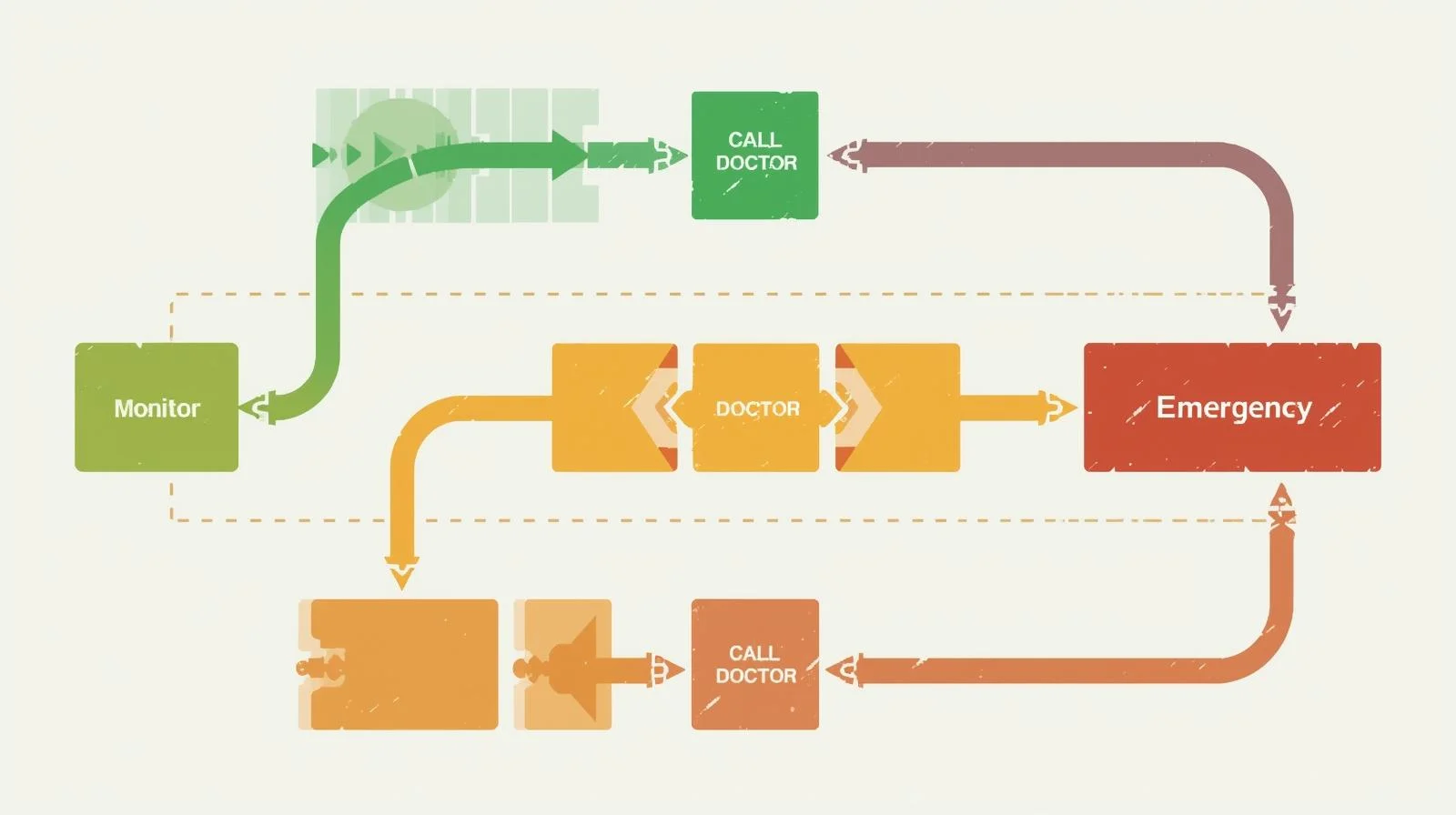
Outcome paths:
Monitor at Home
Call Doctor / Visit Urgent Care
Seek Emergency Care Immediately
Reassurance and Empowerment
Recognizing red flags is not about creating fear — it’s about empowering you with confidence. By knowing what to watch for and acting promptly when needed, you ensure the best possible care outcomes for yourself or your loved one.
Preparing for Your Doctor’s Visit: What Information to Bring
When it comes to fever, effective communication is one of your most powerful tools. Arriving prepared not only helps your doctor make a faster, more accurate diagnosis — it also gives you peace of mind that no important detail has been missed. By organizing your observations, you become an active partner in your care, ensuring every symptom and concern is clearly understood.
Compiling Your Fever & Symptom Log
A well-kept record can make all the difference in pinpointing what’s happening and guiding next steps.
What to Record:
- Date and time of each temperature reading.
- Temperature value and method used (oral, rectal, forehead, etc.).
- Medications given — name, dosage, and time administered.
- Accompanying symptoms — onset, duration, severity, and changes over time.
- Fluid intake and urine output, especially for children and older adults.
- Sleep, appetite, and activity patterns — any noticeable changes or fatigue.
Essential Information to Have Ready
Before your appointment, gather these key details to ensure your doctor has a complete picture:
- Current Medications: Include all prescriptions, over-the-counter drugs, and supplements.
- Allergies: Note any known medication, food, or environmental allergies.
- Medical History: Chronic conditions, recent illnesses, surgeries, or vaccinations.
Recent Travel: Especially to regions where specific infections (like malaria or dengue) are common.
Exposure History: Any recent contact with sick individuals or exposure to new environments (e.g., daycare, travel, public events).
Communicating Effectively with Your Healthcare Provider
Your ability to describe what you’ve observed can greatly improve the quality of care you receive. Here’s how to make the conversation most effective:
- Be Specific and Concise: Share facts in order — when the fever started, how high it’s been, and what symptoms appeared alongside it.
- Focus on Observation, Not Interpretation: Describe what you see and feel, not what you think the cause might be.
- Stay Balanced: Avoid minimizing or exaggerating symptoms; accuracy is key.
- Ask for Clarification: If you don’t understand something your doctor says, ask. Clear understanding helps you follow the care plan confidently.
Questions for Your Doctor: Write them down in advance to make the most of your time during the visit.
Conclusion: Empowering Responsible Health Monitoring
Understanding fever isn’t just about numbers — it’s about listening to your body’s signals and responding with informed care. By learning how to observe, document, and interpret these signs responsibly, you’ve taken an important step toward proactive health management.
This guide has given you the tools and knowledge to monitor fever effectively, recognize key patterns, and know when to seek professional help for healthy living in Dubai. You’re no longer at the mercy of uncertainty — you’re equipped, confident, and capable of acting wisely for yourself or your loved ones.
Key Takeaways for the Empowered Monitor
- Fever is a signal, not an enemy. It reflects your body’s defense in action.
- Accurate monitoring is essential. Reliable temperature readings guide timely decisions.
- Fever patterns matter. They provide valuable insights for healthcare professionals.
- Accompanying symptoms, like those for asthma in winter, complete the picture. Observing context is as important as tracking numbers.
- Comfort and hydration come first. Home care should prioritize rest, fluids, and comfort — not aggressive fever suppression.
- Know the red flags. Recognize when to call your doctor or seek emergency care.
- Clear communication ensures better care. Organized observations help doctors diagnose and treat more effectively.
Your Role as a Health Advocate
By becoming a thoughtful and observant “fever detective,” you’re not replacing medical expertise — you’re enhancing it. Your careful tracking and timely actions form a bridge between home care and professional guidance, ensuring that every decision is informed and responsible.
Author Bio:
Dr. Muhammad Jan is a caring practitioner at Call Doctor Now who believes in making healthcare simple and accessible. He’s passionate about helping people understand their symptoms and take smart, informed steps toward better health.
Reviewed and medically verified by Dr. Muhammad Jan, Practitioner — Call Doctor Now.
